
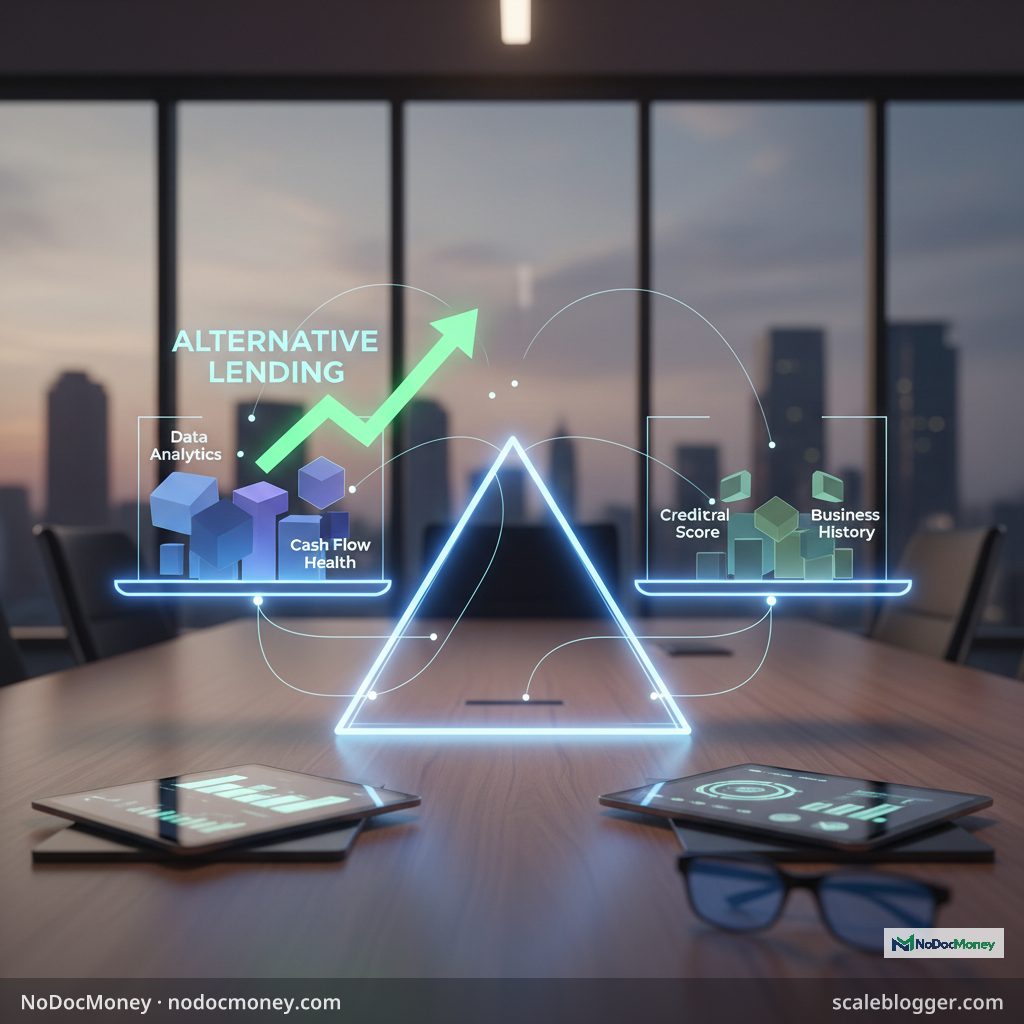
In 2026, lenders focusing on small business loans emphasize clear proof that borrowers can repay, beyond annual revenue figures alone.
All applicants, from large companies to self-employed individuals, must understand how cash flow, debts, and financial documentation impact loan approval.
Alternative financing options are expanding, altering the evidentiary focus of lenders.
Preparing accurate financial records within the next 30 to 90 days is essential to strengthen loan applications amid this evolving market.
Table of Contents
Evidence and timeline: how lending priorities developed into 2026
Impact by stakeholder: what the shifts mean for different applicants
Actions and signals to monitor before a 2026 or 2027 application
What Small Business Lending Trends 2026 Mean for Your Next Application
Quick Answer: In 2026, small business lenders prioritize evidence of repayment capacity by examining cash flow patterns, debt-service coverage, and comprehensive financial documentation rather than relying solely on annual revenue.
Applicants should compile digital accounting records, bank statements, and credit information within 30 to 90 days before applying to demonstrate consistent cash flow and repayment ability.
This approach is consistent across both traditional banks and alternative lenders, underscoring the importance of verifiable transaction histories.
What changed in small business lending trends 2026
There is often a 30 to 90 day gap between when a business can borrow and when it is ready to apply.
No single rule defines small business lending trends in 2026.
Banks, online lenders, and others now want clearer proof that a borrower can repay a loan.
Revenue alone matters less if cash flow is uneven.
Lenders may check debt-service coverage.
This means how much cash remains to pay loans compared to what is owed.
They also look at average account balances, overdrafts, owner withdrawals, and current debts.
This is a current market trend, not a rule for every lender.
Even a business with $500,000 yearly sales may be asked questions if payments come late or debts use most of the cash.
Digital accounting, linked bank data, and automated checks are changing what lenders ask for.
Faster decisions do not mean less checking.
Often, transaction histories, tax returns, and credit reports get reviewed earlier.
Evidence behind business funding requirements in 2026
Underwriting area | Evidence an applicant may be asked to provide | What the evidence helps demonstrate | Preparation step for the next 30 to 90 days |
|---|---|---|---|
Revenue consistency | Bank statements, invoices, sales reports | Whether revenue is recurring and verifiable | Reconcile sales reports to deposits |
Free cash flow and debt-service capacity | Profit-and-loss statement, cash-flow records, debt schedule | Ability to repay after operating costs | Calculate monthly cash available for payments |
Business and personal credit | Credit reports and current account obligations | Payment history and existing repayment pressure | Correct errors and document disputed items |
Bank-account activity | Recent business statements and transaction history | Balance stability, overdrafts, and cash-flow volatility | Separate business and personal transactions |
Tax and accounting records | Tax returns, general ledger, accounting exports | Consistency between reported income and records | Close open periods and resolve unreconciled items |
Collateral or asset value | Equipment records, property details, valuations | Available security and recovery value | Collect ownership and valuation documents |
Time in business and ownership stability | Formation records, licenses, ownership documents | Operating history and continuity | Organize formation, license, and ownership files |
This table shows common proof lenders ask for in 2026 based on usual checks.
Different lenders have different rules, especially about bank statements and loans that need less paperwork.
Risk checks are getting more detailed.
Lenders may check if a business depends on a few customers, has seasonal swings, big unusual transfers, falling balances, or pressure from current loans.
These signs can change the loan cost, terms, or amount.
They usually do not cause automatic denial.
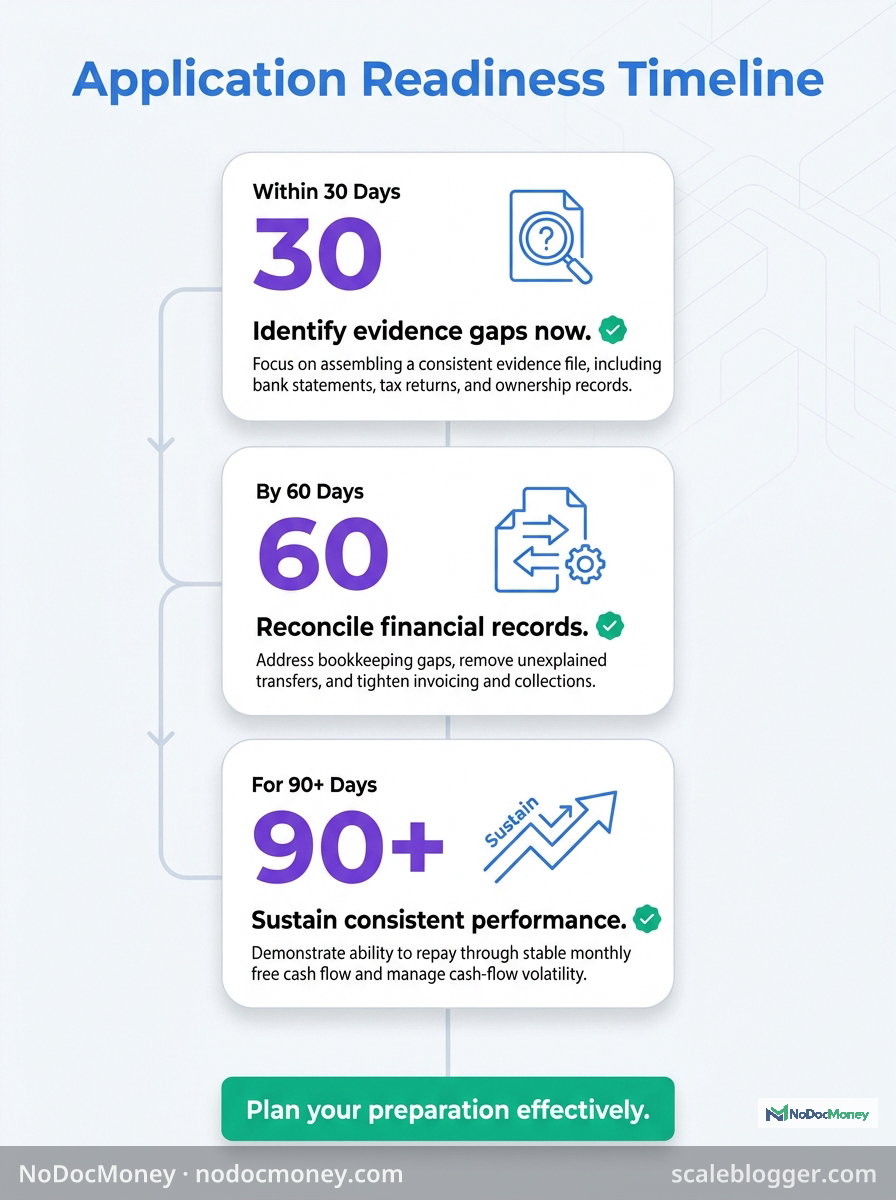
In the next 30 days, find gaps in your evidence.
By 60 days, fix financial records and reduce unnecessary cash flow problems.
By 90 days, compare loan options based on your proven ability to repay, not just revenue.
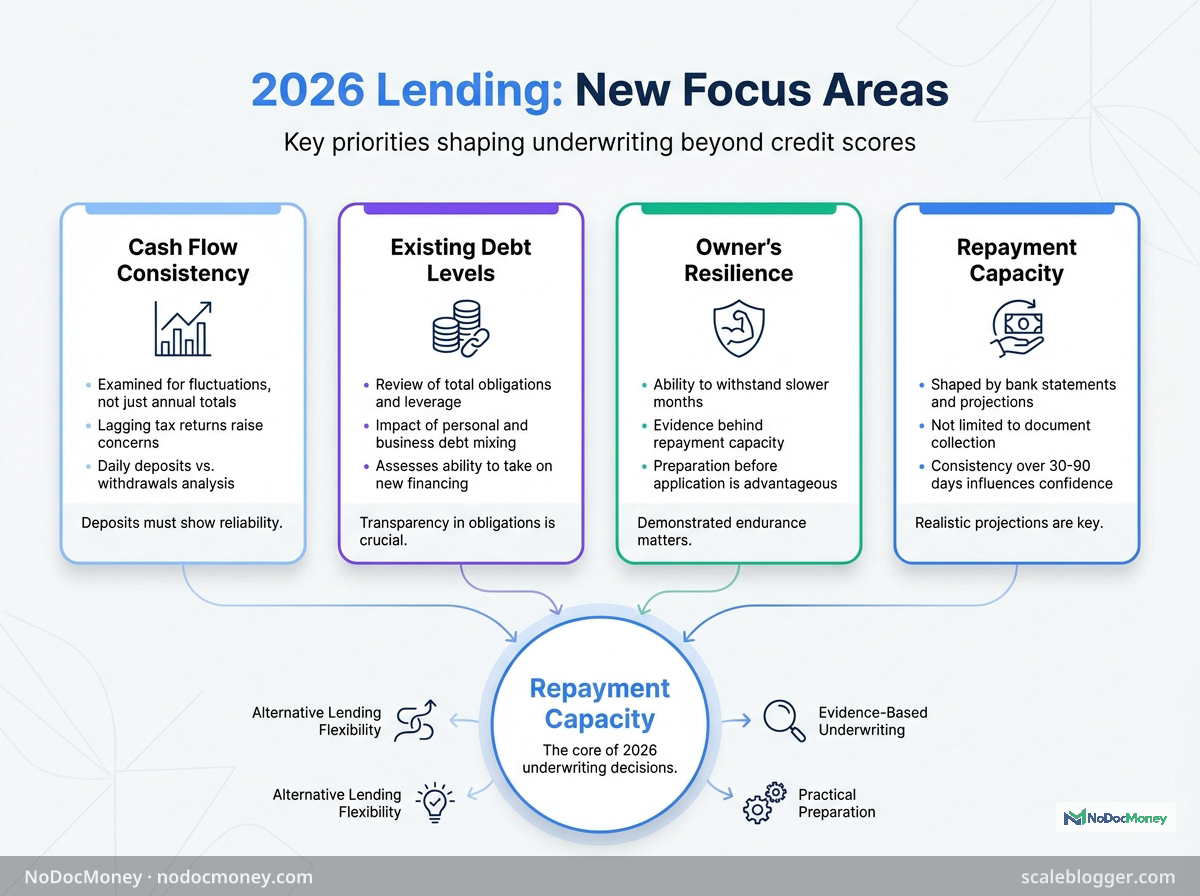
Evidence and timeline: how lending priorities developed into 2026
To understand how lending priorities changed, you must separate broad market data from what each lender does.
Regulatory surveys, policy updates, and forecasts give different views that apply in different ways.
For example, a 2025 survey shows lender views at that time.
A 2026 policy change applies only from its start date and only to some products or borrowers.
Forecasts from groups or credit bureaus show what is expected, not confirmed changes.
When checking claims about 2026 funding rules, it is important to know where, when, and how broad the evidence is.
Confirmed rules should say the lender, product, start date, and which borrowers must follow them.
Reported trends must name the survey or group that gave them and say if they cover approved loans, applications, or failures.
Careful attribution helps applicants avoid misreading signals and make smart choices in 30 to 90 days.
Applicants should check which claims have official dated documents or data within 30 days.
Then match these to lender needs by 60 days, and decide when to apply or fund by 90 days.
Without clear sources, treat statements as opinions, not facts.
Base funding choices on solid proof you can repay.
Impact by stakeholder: what the shifts mean for different applicants
Different small business applicants face unique challenges and chances in the changing lending scene of 2026.
Established owners benefit from using full financial records but should first fix income and cash flow issues to meet lender checks.
Seasonal businesses must clearly show how revenue rises and falls.
This explains cash flow cycles and reduces lender worries.
Startups and new businesses should add strong contracts and proof of owner investments to their limited history.
Business buyers should match buyer qualifications with the target business’s financials.
This makes sure debt payments fit verified cash flow.
Applicants with weak credit or tax records should fix these problems early to improve their chances of financing.
Financing options and evidence by applicant situation
Applicant situation | Funding route options | Evidence to prepare | Key considerations | Pre-application decision |
|---|---|---|---|---|
Stable revenue, short-term needs | Bank line, credit union loan | Bank and tax statements, receivables | Longer review may yield better terms | Choose flexibility vs. fixed repayment |
Uneven/seasonal revenue | Seasonal lines, revenue-based loans | Monthly sales, cash flow forecasts | Flexible repayment may cost more | Align payments with low-income periods |
Equipment purchase | Equipment or SBA loans | Purchase quotes, financials | Collateral secures loan | Verify asset useful life matches term |
Acquisition financing | SBA, seller financing | Target financials, debt schedules | Due diligence may delay closing | Assess cash flow support post-close |
Limited credit history | Secured or alternative lenders | Credit profile, contracts | Faster access may cost more | Build credit vs. borrowing now |
Urgent working capital | Credit cards, short-term loans | Recent deposits, invoices | Speed increases cost | Compare full repayment costs |
Document needs differ among alternative lenders but stay important.
Fixing record mismatches and tax problems early can open more financing options and get better terms.
Actions and signals to monitor before a 2026 or 2027 application
To get ready to apply for a small business loan in 2026, gather all complete and consistent documents.
Also, watch for changes in lender rules.
Start by collecting business and personal bank statements, tax returns, profit and loss reports, debt lists, ownership papers, and a clear use of funds statement.
Separate recurring revenue from one-time income.
Then find monthly free cash flow after paying costs and debt.
In the next 60 days, improve bookkeeping, remove unclear transfers, tighten invoicing and collections.
Test borrowing plans against possible sales drops.
Business buyers should keep careful records of seller financials.
Show past results separate from forecasts.
Watch announcements from providers, rate changes, credit score needs, bank statement review methods, and application levels in 2026.
More requests for statements may mean stricter checks.
Faster decisions or more product ads may mean more competition.
But neither means easier approval.
The application-readiness decisions to make within 90 days
Time horizon | Preparation priority | Evidence or metric to review | Question to answer | Decision or next action |
|---|---|---|---|---|
Next 30 days | Build a reliable file | Statements, tax records, debt schedule, ownership documents | Do records tell the same financial story? | Reconcile gaps before requesting terms |
Days 31 to 60 | Improve operating capacity | Collections, margins, cash-flow volatility, debt-service coverage | Can repayment withstand a weaker month? | Adjust costs, borrowing size, or timing |
Days 61 to 90 | Test funding assumptions | Use of funds, projected payment, total financing cost | Does the project generate enough cash to support debt? | Proceed, resize the request, or delay |
Before comparing lenders | Define the financing route | Bank, credit union, SBA-backed, fintech, or alternative terms | Which trade-off matters most: cost, speed, flexibility, or documentation? | Compare written offers using the same assumptions |
Before submitting an application | Confirm readiness | Required documents, personal guarantees, collateral, credit impact | Will this application create avoidable risk? | Submit selectively and preserve an audit trail |
Compare total cost, payment frequency, prepayment terms, collateral, guarantees, reporting needs, and funding speed.
Bank and credit union loans may need more documents.
SBA-backed loans may have extra process and eligibility rules.
Fintech and alternative lenders may trade speed for cost or repayment flexibility.
Needs differ by product.
Waiting to apply can strengthen your file if records are incomplete or repayment ability is unclear.
But it can be risky if you need funds fast.
Write down the cost of waiting and expected benefits.
Keep notes on revenue guesses, project costs, payment estimates, and worst-case scenarios for each lender.
What are the new SBA loan requirements for 2026?
In 2026, SBA loan requirements emphasize detailed proof of repayment capacity over annual revenue alone.
Applicants must prepare at least 12 months of bank statements, demonstrate consistent cash flow, and provide debt-service coverage ratios along with comprehensive financial documentation within 30 to 90 days of application.
Accurate bookkeeping and transparent financial narratives are crucial for approval.
What are the 5 C's of underwriting?
While the article does not explicitly list the 5 C's, traditional underwriting focuses on Character, Capacity, Capital, Collateral, and Conditions.
In 2026, lenders prioritize Capacity—specifically cash flow patterns and debt-service coverage—along with Capital and comprehensive financial documentation to assess repayment ability more thoroughly.
What are the key trends for small businesses in 2026?
Key trends in 2026 include lenders placing more weight on consistent cash flow patterns and repayment capacity rather than annual revenue alone.
There is increased scrutiny on debt obligations, owner withdrawals, and financial documentation quality.
Alternative financing options also affect lending priorities, making comprehensive and up-to-date financial records critical to application success.
What is the 20% rule for SBA?
The article does not mention or define the 20% rule for SBA loans.
Therefore, no specific details about a 20% rule can be provided based on the available information.
How hard is it to get a $200,000 business loan?
Securing a $200,000 business loan in 2026 requires thorough evidence of the ability to repay, including solid cash flow documentation and debt-service coverage.
Preparation of detailed financial records, such as 12 months of bank statements and tax returns, within 30 to 90 days before applying improves chances.
While challenging, meeting these documentation standards and presenting consistent cash flow can facilitate approval.
Conclusion
What Small Business Lending Trends 2026 Mean for Your Next Application
In 2026, lenders look more closely at financial strength and document quality.
Applicants should prepare at least 12 months of bank statements, figure key debt service numbers, and spot cash flow changes well before applying.
Making a clear evidence file that shows financial patterns helps underwriting and boosts readiness.
Knowing lender expectations about cash on hand, debts, and cash flow swings helps applicants tailor their documents and timing.
Starting early and being clear about finances can improve approval chances and lead to better loan terms.
Download: Download Template (PDF)
Sources
- Business Owners — Looking for Funding? 💰 Need extra capital for inventory, payroll, equipment, expansion, or everyday business expenses? I help businesses expl (Accessed: November 16, 2026)
- Biz Funding Now Quick pulse check for business owners, contractors, and founders looking at capital options: With traditional banks tightening commercial crite (Accessed: November 16, 2026)
- SBA Loan help SBA 7A Lending chances inquiry I have worked in a specific industry for 19 years within all roles possible. I lost my lending and now am diving (Accessed: November 12, 2026)
- Loan or financing for Small Business Had a successful business for a decade with multiple employees and offices, and was making six-figure profit for years. COV (Accessed: November 12, 2026)
- SBA 7A Lending chances inquiry I have worked in a specific industry for 19 years within all roles possible. I lost my lending and now am diving back into the i (Accessed: November 12, 2026)
- SBA Loan inquiry SBA 7A Lending chances inquiry I have worked in a specific industry for 19 years within all roles possible. I lost my lending and now am divi (Accessed: November 12, 2026)
- Fast small business/personal loans? I know its the end of the month but I just had a two paying customers drop out of something that now makes it impossible to (Accessed: November 12, 2026)
- Small Business Lending Statistics and Trends for 2026 (Accessed: November 16, 2026)
- Fund your small business with SBA loans (Accessed: November 12, 2026)
- Small Business Loans Guide: How to Get Approved in 2026 (Accessed: November 12, 2026)
- The Regulatory Changes Shaping Small Business Lending ... (Accessed: November 16, 2026)
- 2026 Main Street Metrics: Trends over Time from the Small ... (Accessed: November 16, 2026)
- 2026 Report on Employer Firms: Findings from the 2025 ... (Accessed: November 12, 2026)
- The State of Small Business Lending: Trends and ... (Accessed: November 16, 2026)
- 2026 Startup Business Loan Requirements By Type And ... (Accessed: November 12, 2026)